
- Bring your own drinks
-

- All guests must be 21
-
Wheelchair access
- Wheelchair Accessible
-

- Kid-friendly event

This is a groupmuse
A live concert in a living room, backyard, or another intimate space. They're casual and friendly, hosted by community members.
Host
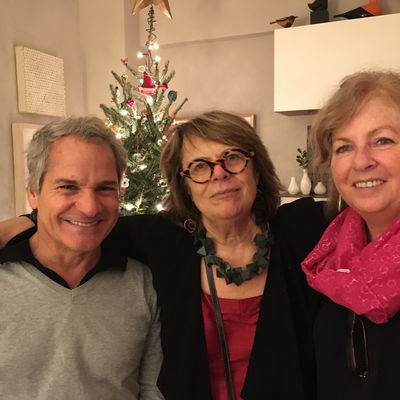
Hello! This is the second in an "on the Hudson" series featuring music from different geographical areas. The range of music offered, as with this one, can go from classical to traditional to modern.
Leonardo Reyna is from Cuba. He has won awards for his classical playing as well as a special Tony Award for his work in "Buena Vista Social Club"on Broadway.
As usual I will provide some things to eat. Please bring something to drink. Entry begins at 5pm and music will start 20-30 minutes after. Please try not to be late so that you don't interrupt the music.
Here are some program notes from Leonardo:
The program offers a vivid panorama of Cuban piano music, tracing a path from 19th-century salon traditions to the rhythmic and cultural synthesis that defines Cuba’s musical identity. At its core lies the dialogue between European forms and African-derived rhythms — a meeting point that shaped the island’s unique musical language.
It opens with the Danzas of Ignacio Cervantes, where refined pianistic writing coexists with unmistakable Cuban gestures. These pieces, composed in exile and at home, capture both nostalgia and national character, anticipating many of the rhythmic and expressive traits that would later define Cuban music.
The program then moves into the 20th century with composers who expanded this language in distinct directions. Carlos Fariñas, in his 7 Sones Sencillos, reimagines the popular son through a modern and often abstract pianistic lens. Leo Brouwer offers a more distilled and experimental voice in his Bocetos, where gesture and texture become central expressive elements.
Afro-Cuban identity takes a more explicit role in the works of Amadeo Roldán, whose pieces incorporate rhythmic structures and cultural references rooted in Afro-Cuban traditions, bringing percussive energy and ritualistic character into the piano repertoire.
A culminating point of the program is reached with the Danzas Afro-Cubanas of Ernesto Lecuona, where virtuosity, theatricality, and rhythmic vitality converge. These works translate the sounds of the street, the dance, and Afro-Cuban ceremonial life into a pianistic language of remarkable immediacy and brilliance.
Across these works, the program reveals how Cuban composers transformed inherited European forms by infusing them with the island’s diverse cultural roots, creating a repertoire that is at once sophisticated, rhythmically compelling, and deeply connected to lived experience.
See ya,
Marjorie
What's the music?
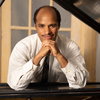
PROGRAMA CUBA
Ignacio Cervantes Danzas
(1847-1905)
I.Siempre Sí (Always “Yes”)
II.Los Tres Golpes (Three Strikes)
III.El velorio (The Wake)
IV. Improvizada (Improvized)
V.Picotazos (The Fighting Cock Attacks)
VI. Adios a Cuba (Farewell to Cuba)
VII.Los Muñecos (The Puppets)
Carlos Fariñas 7 Sones Sencillos
(1934-1870)
Leo Brouwer 2 Bocetos
(1939*)
Amadeo Roldan
(1900-1939)
I. Diablito Baila
II. Preludio Cubano
III. Mulato
Ernesto Lecuona Danzas Afro-Cubanas
(1895-1963)
La Conga de media noche
Danza Negra
…y la Negra bailaba
Danza de los Ñañigos
Danza Lucumi
La Comparsa
Where does this music come from?
The program offers a vivid panorama of Cuban piano music, tracing a path from 19th-century salon traditions to the rhythmic and cultural synthesis that defines Cuba’s musical identity. At its core lies the dialogue between European forms and African-derived rhythms — a meeting point that shaped the island’s unique musical language.
It opens with the Danzas of Ignacio Cervantes, where refined pianistic writing coexists with unmistakable Cuban gestures. These pieces, composed in exile and at home, capture both nostalgia and national character, anticipating many of the rhythmic and expressive traits that would later define Cuban music.
The program then moves into the 20th century with composers who expanded this language in distinct directions. Carlos Fariñas, in his 7 Sones Sencillos, reimagines the popular son through a modern and often abstract pianistic lens. Leo Brouwer offers a more distilled and experimental voice in his Bocetos, where gesture and texture become central expressive elements.
Afro-Cuban identity takes a more explicit role in the works of Amadeo Roldán, whose pieces incorporate rhythmic structures and cultural references rooted in Afro-Cuban traditions, bringing percussive energy and ritualistic character into the piano repertoire.
A culminating point of the program is reached with the Danzas Afro-Cubanas of Ernesto Lecuona, where virtuosity, theatricality, and rhythmic vitality converge. These works translate the sounds of the street, the dance, and Afro-Cuban ceremonial life into a pianistic language of remarkable immediacy and brilliance.
Across these works, the program reveals how Cuban composers transformed inherited European forms by infusing them with the island’s diverse cultural roots, creating a repertoire that is at once sophisticated, rhythmically compelling, and deeply connected to lived experience.
Location
Exact address sent to approved attendees via email.
This is a groupmuse
A live concert in a living room, backyard, or another intimate space. They're casual and friendly, hosted by community members.
Host
Attendees









 Continue with Facebook
 Continue with Google
 Continue with Apple
Comments (1)
Comment sections are only for participants.