Liszt’s Harmonies poétiques et religieuses, Part II: Romantic Death and Transcendence
SW Berkeley
Sun, March 22, 2026, at 5:30 PM, PDT

- Bring your own drinks
-

-
Not designed for kids
This event's geared toward adults, please leave little ones at home.
-
Wheelchair access
- Not wheelchair accessible

This is a groupmuse
A live concert in a living room, backyard, or another intimate space. They're casual and friendly, hosted by community members.
Host

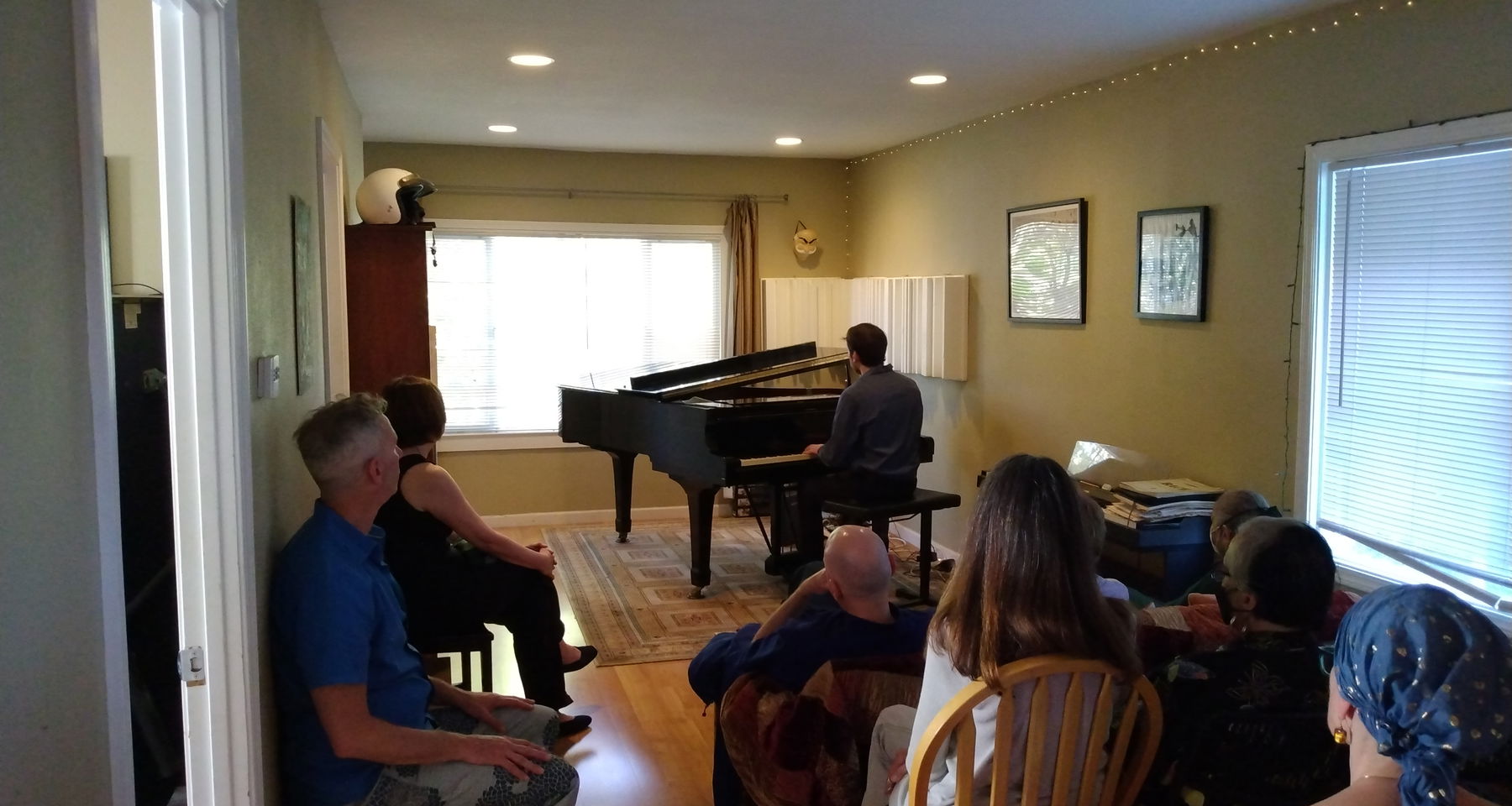
Local legend Theodora Serbanescu-Martin will play the 2nd half of this group of Liszt's late piano masterpieces, and will give a short lecture about them.
Doors open at 5:30, music starts at 6:00.
What's the music?

Romantic Death & Transcendence: Liszt's Harmonies poetiques
PROGRAM
LISZT Harmonies poétiques et religieuses, S. 173
1. Invocation
2. Ave Maria
3. Bénédiction de Dieu dans la solitude ("The Blessing of God in Solitude")
4. Pensée des morts ("In Memory of the Dead")
5. Pater Noster
6. Hymne de l'enfant à son réveil ("The Awaking Child’s Hymn")
7. Funérailles (Funeral)
8. Miserere, d'après Palestrina (after Palestrina)
9. La lampe du temple (Andante lagrimoso)
10. Cantique d'Amour ("Hymn of Love")
Where does this music come from?
Composed and repeatedly reworked across the 1830s and 1840s, Liszt’s Harmonies poétiques et religieuses stands at the philosophical center of his output. The title comes from a collection of poems by Alphonse de Lamartine, whose writing explored solitude, mortality, spiritual transformation, and the persistence of consciousness beyond bodily life. Liszt revised these works over decades, shaping them into the unified cycle published in 1853.
Spanning a wide emotional and temporal range, the cycle moves between states of contemplation, exuberance, grief, devotion, and transcendence. Several movements emerged during periods of retreat and mourning, while others respond to the nineteenth century’s deep preoccupation with death—not only as a religious rite of passage, but as a material and existential threshold.
Across its full arc, the work constructs the piano as a site of transformation where repetition enables devotion, sound becomes a means of evocation, and the performer navigates a space between presence and absence. Rather than presenting isolated expressions of character or sentiment, the cycle unfolds as a cumulative meditation—one in which earlier moments of stillness and invocation gradually give way to more extreme states of physical, emotional, and sonic intensity.
In this sense, Harmonies poétiques et religieuses is not just a through-composed cycle, but a sustained act of musical thinking: a work that asks for duration, patience, and immersion, and that reveals its deepest meanings only across time.
Location
Exact address sent to approved attendees via email.
This is a groupmuse
A live concert in a living room, backyard, or another intimate space. They're casual and friendly, hosted by community members.
Host
Attendees










 Continue with Facebook
 Continue with Google
 Continue with Apple
Comments (1)
Comment sections are only for participants.