
- Bring any drinks except red wine
-

- Cats live here
-
Wheelchair access
- Not wheelchair accessible
-

- Some stairs may be present in the space
-

- Kid-friendly event

This is a groupmuse
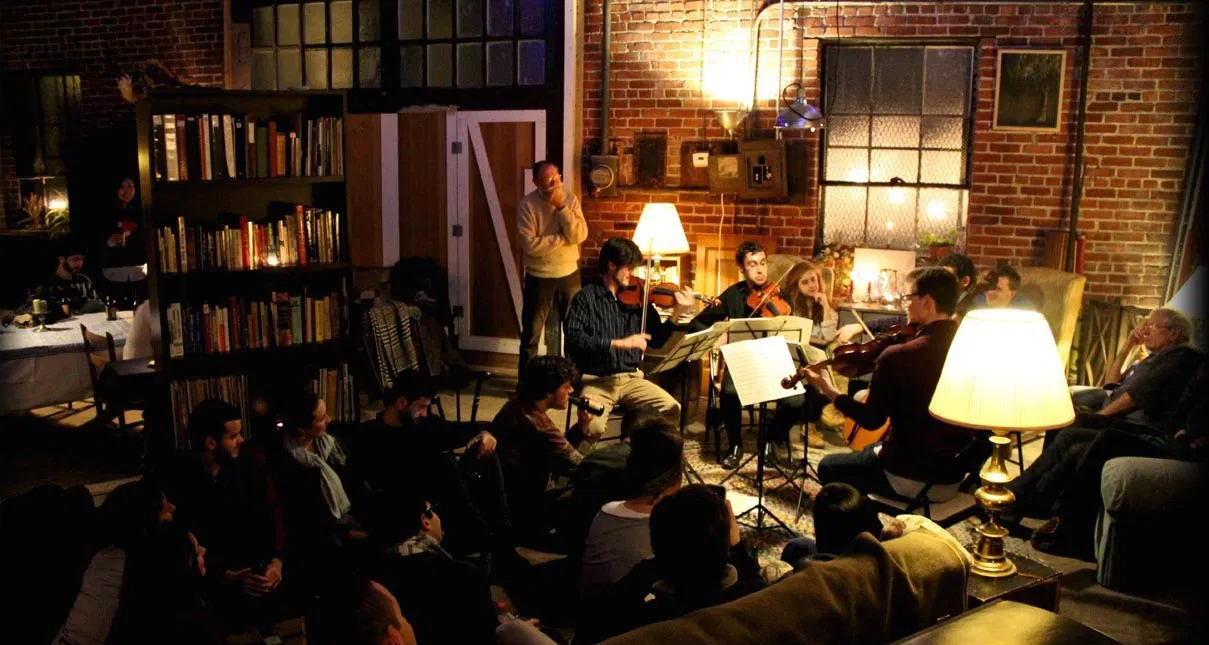
A live concert in a living room, backyard, or another intimate space. They're casual and friendly, hosted by community members.
Host
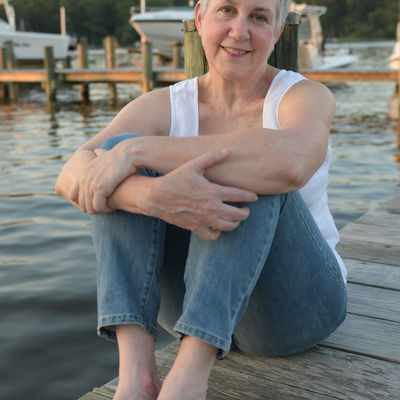
We invite you to join us for an evening of music of Trio Sefardi. Trio Sefardi celebrates the musical heritage of the exiled Jews of Spain, the Sephardim, with songs in Ladino about love and courtship, holidays and hope. Trio members Susan Gaeta (vocals/guitar), Tina Chancey (bass viol, Renaissance violin, rebec, Pontic lyra), and Howard Bass (guitar/lute) are dedicated to bringing the vibrant past into the living present and to continuing the musical traditions of those who created and sustained Sephardic song traditions over the centuries. Formed in 2010, the trio draws on experience in folk music, jazz, early music, and the influence of their mentor, the Bosnian-born Sephardic singer/composer Flory Jagoda (1923 – 2021).
What's the music?
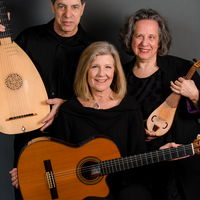
Our program will present traditional Sephardic songs, sung in Ladino, as well as compositions and arrangements we learned from Flory Jagoda, composer of the well-loved Hanuka song, "Ocho kandelikas," as well as many secular songs that have enriched the Sephardic repertoire. In addition to those we learned from Flory our program includes songs from other Balkan sources, Turkey, and North Africa--songs of love and loss, hope and despair, and, of course, food and drink.
Where does this music come from?
In 1492 all the Jews of Spain who refused to convert to Christianity were forced into exile. They settled in N. Africa and around the Mediterranean in the Ottoman Empire, especially in Turkey, Greece, and the former Yugoslavia. In exile, they continued to speak Spanish and pass the old songs from mother to daughter, and they made new songs. While many songs would have been sung unaccompanied, when they had instruments they used them. For five centuries, they maintained their language, which is now known as Ladino. Many of their communities were destroyed during WWII, but crucial elements of their culture survived, nurtured by people like Flory Jagoda, and preserved by folklorists and ethnomusicologists who collected songs before the war. Now a new generation of musicians are performing Sephardic songs all over the world, keeping the language, history, and memory of once-vibrant communities alive.
Location
Exact address sent to approved attendees via email.
This is a groupmuse
A live concert in a living room, backyard, or another intimate space. They're casual and friendly, hosted by community members.
Host
Attendees



 Continue with Facebook
 Continue with Google
 Continue with Apple
Comments (1)
Comment sections are only for participants.