
- Alcoholic and non-alcoholic drinks provided
-
Wheelchair access
- Not wheelchair accessible
-

- Some stairs may be present in the space
-

- Kid-friendly event

This is a groupmuse
A live concert in a living room, backyard, or another intimate space. They're casual and friendly, hosted by community members.
Host
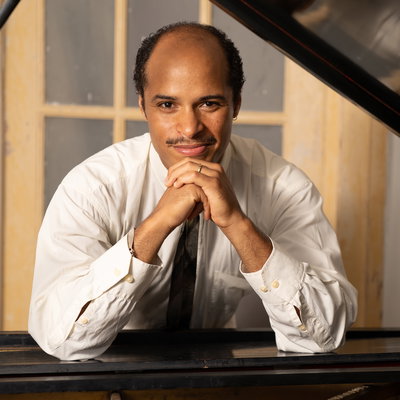
Beethoven & Albéniz — An Intimate Salon in Harlem
A select, invitation-style gathering in a private Harlem residence, centered on music, conversation, and shared listening.
The evening is accompanied by a curated wine selection, generously sponsored by a local winery.
The program features Piano Sonata No. 23 “Appassionata” by Ludwig van Beethoven, followed by Iberia, Book I by Isaac Albéniz, performed in full.
Pianist Leonardo Reyna often places works in contrast with the desire to experiment and bring the listener into different sonic spaces. Beethoven is that relentless search for hope. The genius from Vienna was and remains music that is current and full of strength, and Leonardo presents it here followed by the first book of Iberia, one of the most important works in the repertoire, not only for its pianistic complexity but for its immense stylistic richness, an imaginative and descriptive world, and, like Beethoven, of a very pure character.
Leonardo studied in Germany for many years with teachers from the lineage of Claudio Arrau and is now based in New York. A pianist with a wide-ranging repertoire, he has been awarded in more than 15 international competitions, including the Ignacio Cervantes International Piano Competition, and has performed as a soloist with symphony orchestras across Latin America and Europe.
The concert takes place on a Baldwin piano in an intimate setting, with space for conversation and exchange around music and art.
What's the music?

Program
Piano Sonata No. 23 in F minor, Op. 57 “Appassionata”
Ludwig van Beethoven (1770–1827)
I. Allegro assai
II. Andante con moto
III. Allegro ma non troppo – Presto
Iberia, Book I
Isaac Albéniz (1860–1909)
I. Evocación
II. El Puerto
III. Fête-Dieu à Séville
Where does this music come from?
Tonight’s program is rooted in two major pianistic and cultural traditions that continue to define the instrument’s language.
On one side is the Central European classical tradition of Ludwig van Beethoven (1770–1827), represented here by the Piano Sonata No. 23 in F minor, Op. 57 “Appassionata”. Beethoven stands at a pivotal point in Western music history, expanding Classical forms into the early Romantic era. His work reflects a lineage of structural rigor inherited from Haydn and Mozart, while pushing toward a more individual, dramatic, and emotionally expansive musical language that profoundly influenced later Romantic composers.
On the other side is the Spanish nationalist and pianistic tradition embodied by Isaac Albéniz (1860–1909), particularly in Iberia, Book I. Albéniz’s writing emerges from a lineage shaped by Romantic harmony, French impressionism, and Spanish folk idioms, filtered through a highly advanced pianistic technique influenced by composers such as Liszt and later French piano schools. Iberia represents one of the highest points of this tradition, expanding the piano into orchestral color and rhythmic complexity while remaining deeply connected to Spanish musical identity.
As a performer, Leonardo Reyna comes to this repertoire from a background shaped by the Central European piano school, having studied for many years in Germany with teachers connected to the pedagogical lineage of Claudio Arrau. This tradition emphasizes structural clarity, long-form phrasing, and a deep engagement with the score as an architectural and expressive whole.
Within this context, the concert brings Beethoven and Albéniz into dialogue: two distinct but equally rigorous traditions of musical thought—one rooted in Germanic formal development, the other in Spanish coloristic and rhythmic invention—both of which continue to shape the modern piano repertoire today.
Location
Exact address sent to approved attendees via email.
This is a groupmuse
A live concert in a living room, backyard, or another intimate space. They're casual and friendly, hosted by community members.
Host
 Continue with Facebook
 Continue with Google
 Continue with Apple
Comments
Comment sections are only for participants. Please sign in and reserve a spot above to view comments.