 Continue with Facebook
 Continue with Google
 Continue with Apple
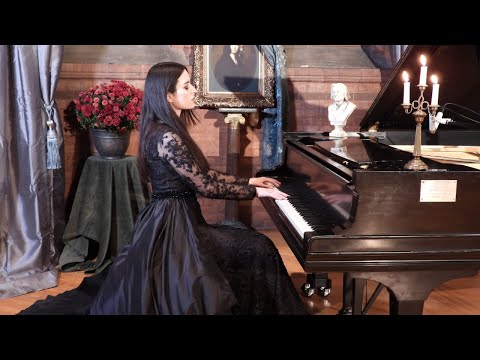
Liszt's Harmonies Poétiques, pt. 1
Details
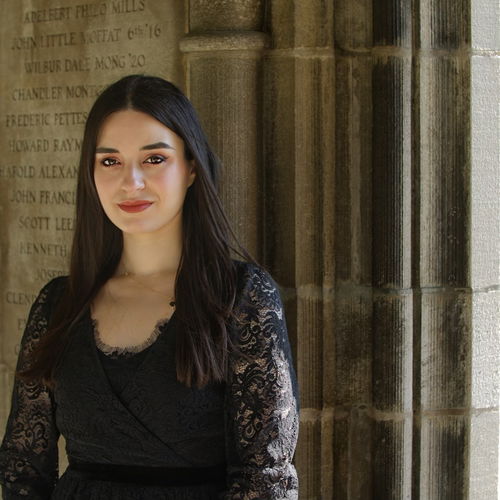
Theodora Serbanescu-Martin full profile / Piano / 1 musician
Full program notes
I'll be playing the first half of Liszt's extensive Harmonies poétiques et religieuses, S. 173 (written/reworked in 1847, published 1853, or pieces 1-5:
- Invocation
- Ave Maria
- Bénédiction de Dieu dans la solitude ('The Blessing of God in Solitude', completed at Woronińce);
- Pensée des morts ('In Memory of the Dead')
- Pater Noster
And I will end with one extra piece from Anées de pélèrinage I:
Chapelle de Guillaume Tell (William Tell's Chapel)
I will also introduce the program with some brief historical background!
P.S. Pt. 2 of Harmonies to follow later this spring.
Historical context
Composed and repeatedly reworked across the 1830s and 1840s, Harmonies poétiques et religieuses stands at the spiritual and poetic center of Franz Liszt’s output. The title is borrowed directly from a collection of poems by Alphonse de Lamartine, whose writing -- lyrical, metaphysical, and politically liberal -- deeply shaped Liszt’s imagination. Like Lamartine’s verse, this music meditates on solitude, prayer, mourning, and transcendence, as an expression of inner spirituality rather than dogma.
Liszt worked on these pieces over many years, revising earlier versions into the unified cycle published in 1853. Several movements reflect moments of retreat and contemplation during his time in the Polish countryside at Woronińce, while others respond to personal loss and the Romantic preoccupations with death, memory, and the sacred. The result is music that inhabits a space between devotion and doubt -- rooted in Catholic ritual yet infused with the era’s metaphysical questioning and humanitarian idealism.
The program concludes with Chapelle de Guillaume Tell from Années de pèlerinage, Première Année: Suisse, a work that links spiritual reflection to landscape, freedom, and moral heroism. Together, these pieces present Liszt's multifaceted self, infinitely beyond his reputation as a virtuoso showman: a poetic thinker and painter at the keyboard who used sound to explore belief, solitude, and the deepest feeling.
The second half of Harmonies poétiques et religieuses will follow later this spring.
Videos from this player

Audio from this player
Brahms Klavierstücke Op. 116: I. Capriccio in D minor
Brahms Klavierstücke Op. 116: II. Intermezzo in A minor
Brahms Klavierstücke Op. 116: III. Capriccio in G minor
Brahms Klavierstücke Op. 116: IV. Intermezzo in E Major
Brahms Klavierstücke Op. 116: V. Intermezzo in E minor
Brahms Klavierstücke Op. 116: VI. Intermezzo in E Major
Brahms Klavierstücke Op. 116: VII. Capriccio in D minor
Other programs from this ensemble
Brahms & the Art of Difficulty
- Musician profile: Theodora Serbanescu-Martin
-
 Instruments:
piano
Instruments:
piano
-
Exploring Baroque & Romantic Fantasias
- Musician profile: Theodora Serbanescu-Martin
-
Instruments:
Piano
-
- Musician profile: Theodora Serbanescu-Martin
-
Instruments:
2 pianos
- Musicians: Theodora Serbanescu-Martin, Miles Graber
-
- Musician profile: Theodora Serbanescu-Martin
-
Instruments:
Solo piano
-
Death, Dead Hands, & Difficulty @ Piano
- Musician profile: Theodora Serbanescu-Martin
-
Instruments:
solo piano
-
- Musician profile: Theodora Serbanescu-Martin
-
Instruments:
Piano