 Continue with Facebook
 Continue with Google
 Continue with Apple
Traditional Sephardic songs
Details
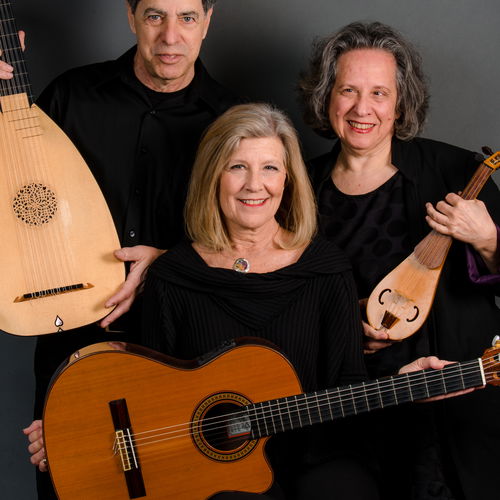
Trio Sefardi full profile / guitar, lute, viol, violin, Pontic lyra / 3 musicians
Other players: Tina Chancey, Susan Gaeta
Full program notes
Our program will present traditional Sephardic songs, sung in Ladino, as well as compositions and arrangements we learned from Flory Jagoda, composer of the well-loved Hanuka song, "Ocho kandelikas," as well as many secular songs that have enriched the Sephardic repertoire. In addition to those we learned from Flory our program includes songs from other Balkan sources, Turkey, and North Africa--songs of love and loss, hope and despair, and, of course, food and drink.
Historical context
In 1492 all the Jews of Spain who refused to convert to Christianity were forced into exile. They settled in N. Africa and around the Mediterranean in the Ottoman Empire, especially in Turkey, Greece, and the former Yugoslavia. In exile, they continued to speak Spanish and pass the old songs from mother to daughter, and they made new songs. While many songs would have been sung unaccompanied, when they had instruments they used them. For five centuries, they maintained their language, which is now known as Ladino. Many of their communities were destroyed during WWII, but crucial elements of their culture survived, nurtured by people like Flory Jagoda, and preserved by folklorists and ethnomusicologists who collected songs before the war. Now a new generation of musicians are performing Sephardic songs all over the world, keeping the language, history, and memory of once-vibrant communities alive.