 Continue with Facebook
 Continue with Google
 Continue with Apple
Shostakovich, Pärt, Oakley
Details
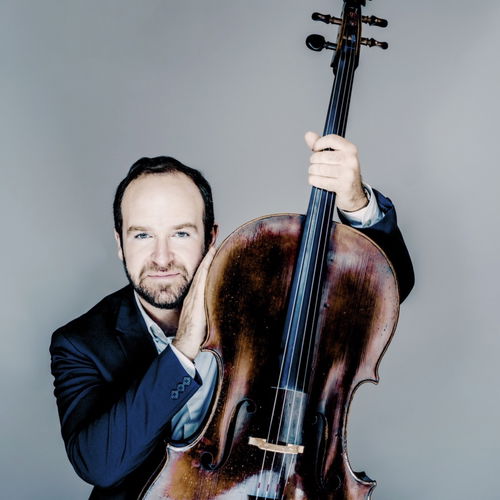
Sandro Sidamonidze full profile / Cello and piano duo / 2 musicians
Other players: Inga kashakashvili
Full program notes
Dmitri Shostakovich — Sonata for Cello and Piano in D minor, Op. 40 (1934)
Written when Shostakovich was twenty-eight, this sonata reveals a composer capable of extraordinary tenderness as well as biting wit. It was first performed by cellist Viktor Kubatsky, its dedicatee, with Shostakovich at the piano.
Across four movements, the relationship between the instruments continually changes. The opening movement’s expansive lyricism gives way to a fiercely energetic scherzo. The slow third movement draws the listener into a more private world, where the cello’s sustained lines carry particular emotional weight. The finale restores momentum with quick exchanges and sharply etched humor.
Listen for the shifts between song and speech, warmth and agitation. The music’s power often lies in how swiftly an apparently simple phrase changes character.
Arvo Pärt — Spiegel im Spiegel (1978)
The title means “Mirror in the Mirror,” suggesting reflections extending into the distance. Originally written for violin and piano, the piece is heard here in its version for cello and piano.
Over gently recurring piano figures, the cello unfolds measured phrases that gradually lengthen. Ascending lines are answered by descending reflections, each returning to a central pitch. Bell-like notes in the piano illustrate Pärt’s tintinnabuli style, in which a melodic line is joined to notes drawn from a three-note chord.
Its apparent simplicity asks for exceptional concentration from both performers. For the listener, it offers an opportunity to notice small changes: the color of a sustained note, the resonance of the piano, and the silence surrounding each phrase.
George Oakley — Sonata for Cello and Piano (2013)
Inspired by a poem by James Carlson, Oakley’s three-movement sonata traces a journey through doubt, prayer, and affirmation. Carlson commissioned the work, which is dedicated to his son Dylan.
The opening solo cello introduces the central character. Increasingly unsettled harmonies and rhythmic challenges create a sense of struggle that remains unresolved at the movement’s close. The second movement, Prayer, turns inward; Oakley found inspiration for its musical language in the sound of Orthodox Christian church bells. The finale seeks a joyful resolution, meeting the composer’s challenge of expressing happiness with substance rather than sentimentality.
Videos from this player


Audio from this player
Other programs from this ensemble
CELLOMANIA: A Cello Duo Concert
- Musician profile: Sandro Sidamonidze
-
 Instruments:
2 cellos
Instruments:
2 cellos
- Musicians: Sandro Sidamonidze, James Acampora
-
- Musician profile: Sandro Sidamonidze
-
Instruments:
Cello and piano
- Musicians: Sandro Sidamonidze, Gleb Ivanov
-
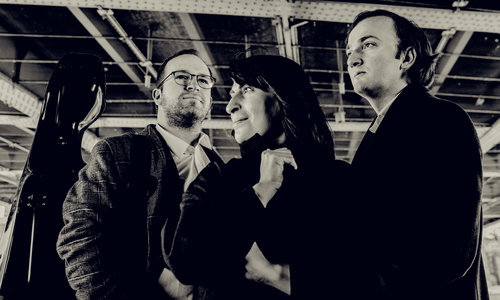
- Musician profile: Trio Revolution
-
Instruments:
Flute, Cello and Piano
-
Schumann, Brahms, and Beyond Sandro Sida
- Musician profile: Sandro Sidamonidze
-
Instruments:
Cello and piano duo
- Musicians: Sandro Sidamonidze, Richarlita You, Piano