 Continue with Facebook
 Continue with Google
 Continue with Apple
Liszt's Complete Harmonies
Details
Theodora Serbanescu-Martin full profile / Solo piano / 1 musician
Full program notes
PROGRAM
LISZT Harmonies poétiques et religieuses, S. 173
1. Invocation
2. Ave Maria
3. Bénédiction de Dieu dans la solitude ("The Blessing of God in Solitude")
4. Pensée des morts ("In Memory of the Dead")
5. Pater Noster
6. Hymne de l'enfant à son réveil ("The Awaking Child’s Hymn")
7. Funérailles (Funeral)
8. Miserere, d'après Palestrina (after Palestrina)
9. La lampe du temple (Andante lagrimoso)
10. Cantique d'Amour ("Hymn of Love")
Historical context
Composed and repeatedly reworked across the 1830s and 1840s, Liszt’s Harmonies poétiques et religieuses stands at the philosophical center of his output. The title comes from a collection of poems by Alphonse de Lamartine, whose writing explored solitude, mortality, spiritual transformation, and the persistence of consciousness beyond bodily life. Liszt revised these works over decades, shaping them into the unified cycle published in 1853.
Spanning a wide emotional and temporal range, the cycle moves between states of contemplation, exuberance, grief, devotion, and transcendence. Several movements emerged during periods of retreat and mourning, while others respond to the nineteenth century’s deep preoccupation with death — not only as a religious rite of passage, but as a material and existential threshold.
Across its full arc, the work constructs the piano as a site of transformation where repetition enables devotion, sound becomes a means of evocation, and the performer navigates a space between presence and absence. Rather than presenting isolated expressions of character or sentiment, the cycle unfolds as a cumulative meditation —one in which earlier moments of stillness and invocation gradually give way to more extreme states of physical, emotional, and sonic intensity.
In this sense, Harmonies poétiques et religieuses is not just a through-composed cycle, but a sustained act of musical thinking: a work that asks for duration, patience, and immersion, and that reveals its deepest meanings only across time.
I approach this work in the ethos of a Romantic pianist — not as a claim to historical replication or authenticity, but in engagement with the nineteenth-century aesthetics of flexibility, improvisation, and expressive intensity as it persists across time. Rather than treating performance as the transparent transmission of inspiration, I understand it as a mediated, material process shaped by bodies, instruments, spaces, and attention. What is often framed as immediacy or transcendence emerges instead through friction: through repetition, instability, and the conditions that resist control.
In this sense, I approach the score beyond a closed system: as a dialogic terrain that invites conversation and framing. As an artist, I am interested in multiplicity rather than congealment or resolution, and I allow for deviation, risk, and the possibility that a performance might produce something unexpected alongside its more familiar expressive paths.
Harmonies poétiques et religieuses is perhaps in the top 5 pieces I've played that most strongly invites and reflects this approach. This work sustains, rather than resolves, the tensions between inspiration and structure, devotion and repetition, transcendence and material presence.
This performance at Jinny’s Studio marks my final Bay Area presentation of Harmonies poétiques et religieuses this spring — an opportunity to encounter this cycle, which is rarely performed in is complete form, as an immersive, uninterrupted experience.
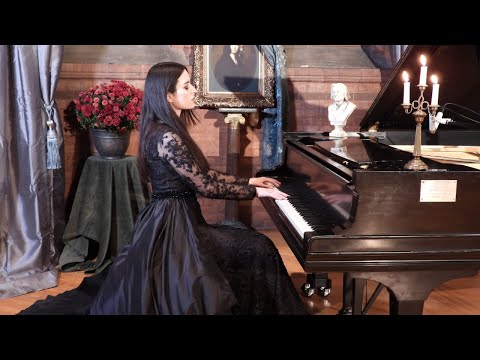
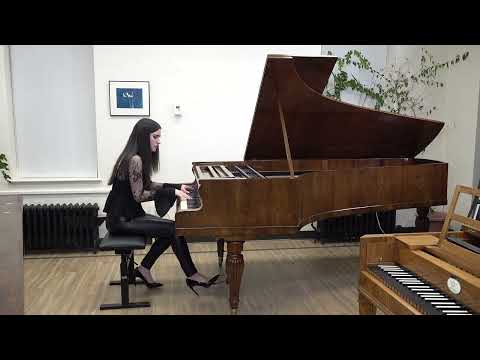
Videos from this player

Audio from this player
Brahms Klavierstücke Op. 116: I. Capriccio in D minor
Brahms Klavierstücke Op. 116: II. Intermezzo in A minor
Brahms Klavierstücke Op. 116: III. Capriccio in G minor
Brahms Klavierstücke Op. 116: IV. Intermezzo in E Major
Brahms Klavierstücke Op. 116: V. Intermezzo in E minor
Brahms Klavierstücke Op. 116: VI. Intermezzo in E Major
Brahms Klavierstücke Op. 116: VII. Capriccio in D minor
Other programs from this ensemble
Brahms & the Art of Difficulty
- Musician profile: Theodora Serbanescu-Martin
-
 Instruments:
piano
Instruments:
piano
-
Exploring Baroque & Romantic Fantasias
- Musician profile: Theodora Serbanescu-Martin
-
Instruments:
Piano
-
- Musician profile: Theodora Serbanescu-Martin
-
Instruments:
2 pianos
- Musicians: Theodora Serbanescu-Martin, Miles Graber
-
Death, Dead Hands, & Difficulty @ Piano
- Musician profile: Theodora Serbanescu-Martin
-
Instruments:
solo piano
-
- Musician profile: Theodora Serbanescu-Martin
-
Instruments:
Piano
-
Liszt Devoted: Harmonies Poétiques, Pt 1
- Musician profile: Theodora Serbanescu-Martin
-
Instruments:
solo piano