 Continue with Facebook
 Continue with Google
 Continue with Apple
Echoes of the Human Spirit
Details
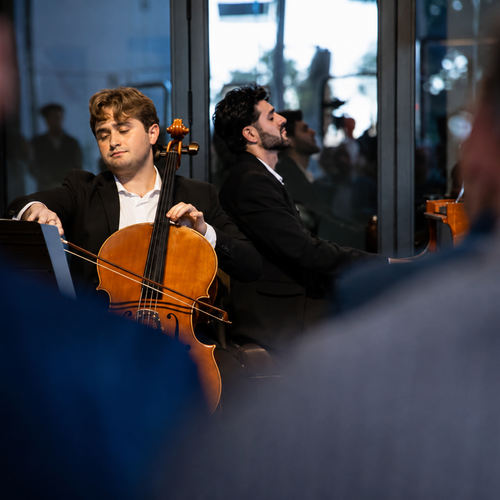
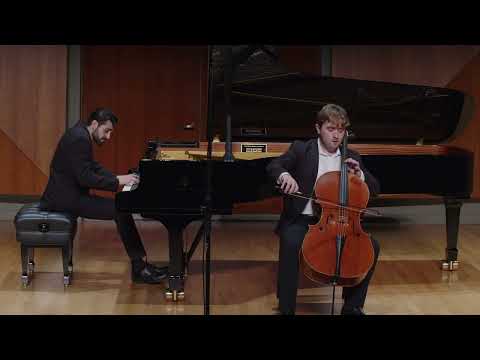
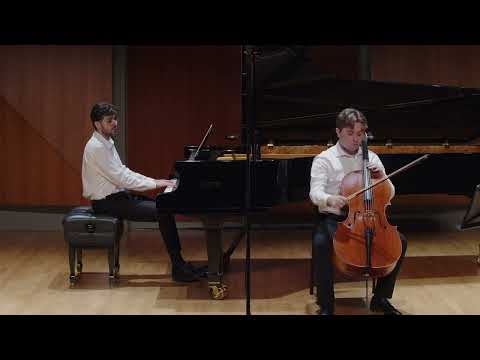
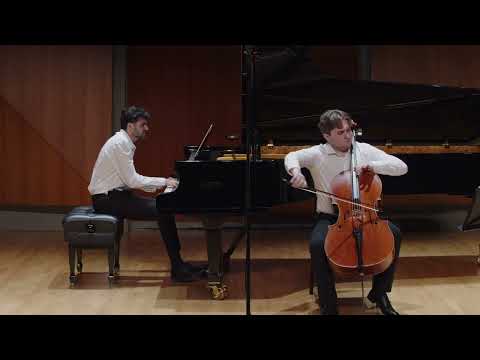
Jayden Lamcellari & Itamar Esformes| Cello & Piano Duo full profile / Cello & Piano Duo / 2 musicians
Other players: Jayden Lamcellari & Itamar Esformes
Full program notes
This program brings together three masterpieces for cello and piano, each revealing a different way in which music can give voice to the human spirit. Beethoven turns inward, creating an intimate conversation of extraordinary depth; Martinů responds to a world of uncertainty with energy, nostalgia, and resilience; and Rachmaninoff transforms vulnerability into soaring lyricism and hope. Across three different eras and musical languages, the cello and piano become equal partners in a journey through reflection, struggle, longing, and ultimately, profound human connection.
Historical context
Ludwig van Beethoven
Sonata for Cello and Piano No. 4 in C major, Op. 102 No. 1
Composed in 1815, Beethoven's Fourth Cello Sonata stands at the threshold of his extraordinary late period. By this time, his hearing loss had become severe, increasingly separating him from the world around him. Yet as his external world grew quieter, his music seemed to turn ever more deeply inward.
The sonata begins not with a grand declaration, but with intimacy. Cello and piano seem to discover the music together, exchanging thoughts with remarkable tenderness and freedom. Moments of calm reflection suddenly give way to energy and urgency, creating the sense of two voices constantly questioning and responding to one another.
This equality between the instruments is essential. The piano does not simply accompany the cello; both voices breathe, struggle, interrupt, and support one another. Beethoven transforms chamber music into something resembling a deeply personal conversation.
There is something remarkably human in this music. Its power does not come primarily from grandeur, but from vulnerability, trust, and the feeling of two voices searching together for understanding.
Bohuslav Martinů
Sonata for Cello and Piano No. 1, H. 277
More than a century later, Bohuslav Martinů composed his First Cello Sonata in Paris in 1939, as Europe stood on the edge of catastrophe. Nazi Germany had occupied his Czech homeland, and Martinů would soon face years of displacement and exile.
Against this dark historical background, however, the sonata refuses to surrender its vitality. Rhythmic energy drives the music forward, while moments of lyricism seem to carry memories of another place and another life. Joy and anxiety often exist side by side.
This tension gives the work its distinctive emotional character. At moments the music feels restless and almost breathless; elsewhere it turns inward, revealing nostalgia and vulnerability beneath its energetic surface.
Martinů continued to carry the musical identity of his homeland with him even when separated from it. In this sonata, energy itself can feel like an act of resilience: the determination to continue creating, remembering, and moving forward even when the future is uncertain.
Sergei Rachmaninoff
How Fair This Spot, Op. 21 No. 7
Arrangement for Cello and Piano
Before the final sonata, we enter a moment of stillness.
Originally written for voice and piano, How Fair This Spot is one of Rachmaninoff's most intimate songs. Its poetry contemplates the beauty of nature—the sky, the earth, and the quiet wonder of being surrounded by something beautiful.
Heard through the singing voice of the cello, the melody becomes almost wordless reflection. Time seems briefly suspended. Rather than standing apart from what follows, the song serves as a gentle doorway into Rachmaninoff's emotional world: a single breath before a much larger journey begins.
Sergei Rachmaninoff
Sonata for Cello and Piano in G minor, Op. 19
Rachmaninoff composed his Cello Sonata in 1901 during one of the great periods of artistic renewal in his life. The disastrous première of his First Symphony in 1897 had deeply shaken his confidence, contributing to a prolonged creative crisis. With the support of physician Nikolai Dahl, Rachmaninoff gradually returned to composition. The celebrated Second Piano Concerto and the Cello Sonata emerged from this remarkable period of renewed creativity.
From its mysterious opening, the sonata unfolds on an expansive emotional scale. Melodies emerge gradually, grow into enormous waves of sound, and retreat again into moments of extraordinary tenderness. The piano and cello remain equal protagonists: sometimes embracing one another, sometimes struggling, sometimes seeming to speak with a single voice.
The slow movement creates an intimate, dreamlike world, while the finale gradually opens toward warmth and affirmation. Yet the journey never feels simple. Rachmaninoff allows melancholy and hope to coexist, giving the music its unmistakable emotional richness.
Heard together, Beethoven, Martinů, and Rachmaninoff offer three very different responses to uncertainty and vulnerability. Beethoven finds meaning through intimate conversation; Martinů answers instability with resilience and motion; Rachmaninoff transforms struggle into expansive lyricism.
Across more than a century, all three arrive at something deeply human: the need to listen, to remember, to hope, and above all, to connect.
Videos from this ensemble
Other programs from this ensemble
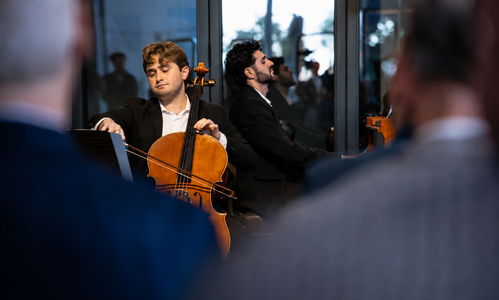
- Musician profile: Jayden Lamcellari & Itamar Esformes| Cello & Piano Duo
-
 Instruments:
Cello & Piano Duo
Instruments:
Cello & Piano Duo
- Musicians: Itamar Esformes, Jayden Lamcellari and Itamar Esformes